
Accident & Incident Investigation

Workplace accident & incident investigation services

Workplace accident investigation is a defined process whereby investigators gather evidence to determine the factors that contributed to an accident. iHSEQ provides workplace accident and incident investigation services Australia-wide.

An accident has been defined as a ‘short, sudden and unexpected event or occurrence that results in an unwanted and undesirable outcome … and must directly or indirectly be the result of human activity rather than a natural event’.

Understanding the causes of accidents is fundamental to helping organisations and personnel learn and develop solutions to prevent recurrence.

At iHSEQ we believe all accidents result from a range of contributing factors (commonly referred to as causative factors). We believe all accidents are preventable — and that personnel, property and plant can be protected.

iHSEQ helps businesses investigate work accidents

There are multiple theories of accident causation — Heinrich’s Domino Theory, Bird and Germain’s Loss Causation Model, Viner’s Generalised Time Sequence Model, and systemic models such as Reason’s Swiss Cheese model and Hollnagel’s Functional Resonance Accident Model (FRAM). Whatever the model, we believe gathering early evidence is fundamental to determining the causes of an accident.

That means understanding the who, what, why, where and when of any accident, then applying sound methodology to determine the sequence of events and the corrective actions that will prevent recurrence.

iHSEQ consultants provide workplace accident investigation across Australia. We understand the importance of gathering evidence early and helping businesses navigate the complex maze of work safety regulatory requirements that follow a workplace accident.

We assist businesses to:

  • Conduct interviews
  • Gather evidence, including still photography and video footage
  • Liaise with media
  • Review documents
  • Determine the sequence of events
  • Undertake scientific testing in evidence preparation — structural testing, electrical testing, microbial analysis, and testing of dusts or other atmospheric contaminants
  • Undertake causal analysis and determine causative factors
  • Implement measures to prevent recurrence
  • Conduct interviews
  • Gathering evidence including still photographs and video footage
  • Liaising with media
  • Reviewing documents
  • Determine the sequence of events
  • Undertaking scientific testing in evidence preparation including structural testing, electrical testing, microbial analysis, testing of dusts or other atmospheric contaminants.
  • Undertaking causal analysis and determining causative factors.
  • Implementing measures to prevent recurrence.

FAQs

Most states of Australia required that you must notify the work safety regulator if immediately if there’s a work-related death, a serious injury or illness, or a dangerous incident at your place of work or caused by the running of your business.

Dangerous incidents are clearly defined by the work safety regulators and you may have obligations to notify other authorities if there is a fire, and electrical incident or an incident involving specialised plant and equipment.

While there are a range of workplace accidents in terms of severity and required response, as a general rule you should:

  • Treat the victim (where possible) and notify emergency services on 000 if required.
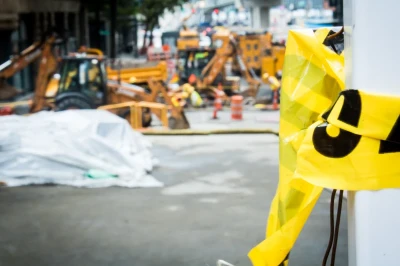
  • Secure the incident area (preferably with the use of barricade tape or other physical barriers) Be extremely careful if you suspect electricity is involved. Never directly touch a person who has been in direct contact with electricity.
  • Notify all affected people to remain clear of the area.
  • Photograph the accident area (wide angle photographs and/or zoomed in photographs of all equipment involved. Videos can be great.
  • Turn off and isolate all equipment in the area.
  • Survey the scene for:Accident victims
  • Involved plant, vehicles, and other equipment
  • Any broken or damaged objects or surfaces such as walls that may be damaged, or struck
  • Tracks or skid marks from equipment
  • Footprints
  • Surface defects such as broken concrete for slips and trips
  • Fluid spills/stains
  • Contaminated materials
  • Debris
  • Distractions
  • The use of safety devices. Were they used, not used, or failed
  • What is the position of equipment?
  • Terrain (rocky, wet, slippery, frozen, cluttered, etc.)
  • Witnesses to the accident and their locations at the time
  • Time of day, lighting, and weather

Obviously looking after the victim of a workplace accident and your own safety must always be a key priority above accident scene preservation.

Workplace accidents can present with a broad range of complex legal issues particularly when there is an alleged breach of regulatory requirements. iHSEQ works with a range of legal practitioners on a range of serious accidents to assist businesses:

  • Understand their legal obligation
  • Address regulatory requirements
  • Prepare defences for workplace accidents
  • Support families through traumatic experiences.

Accident investigation costs can vary based on the complexity of the investigations and the evidence requirements to be gathered or even the complexity of tests involved. You can chat with our team for more information.