

Sale!

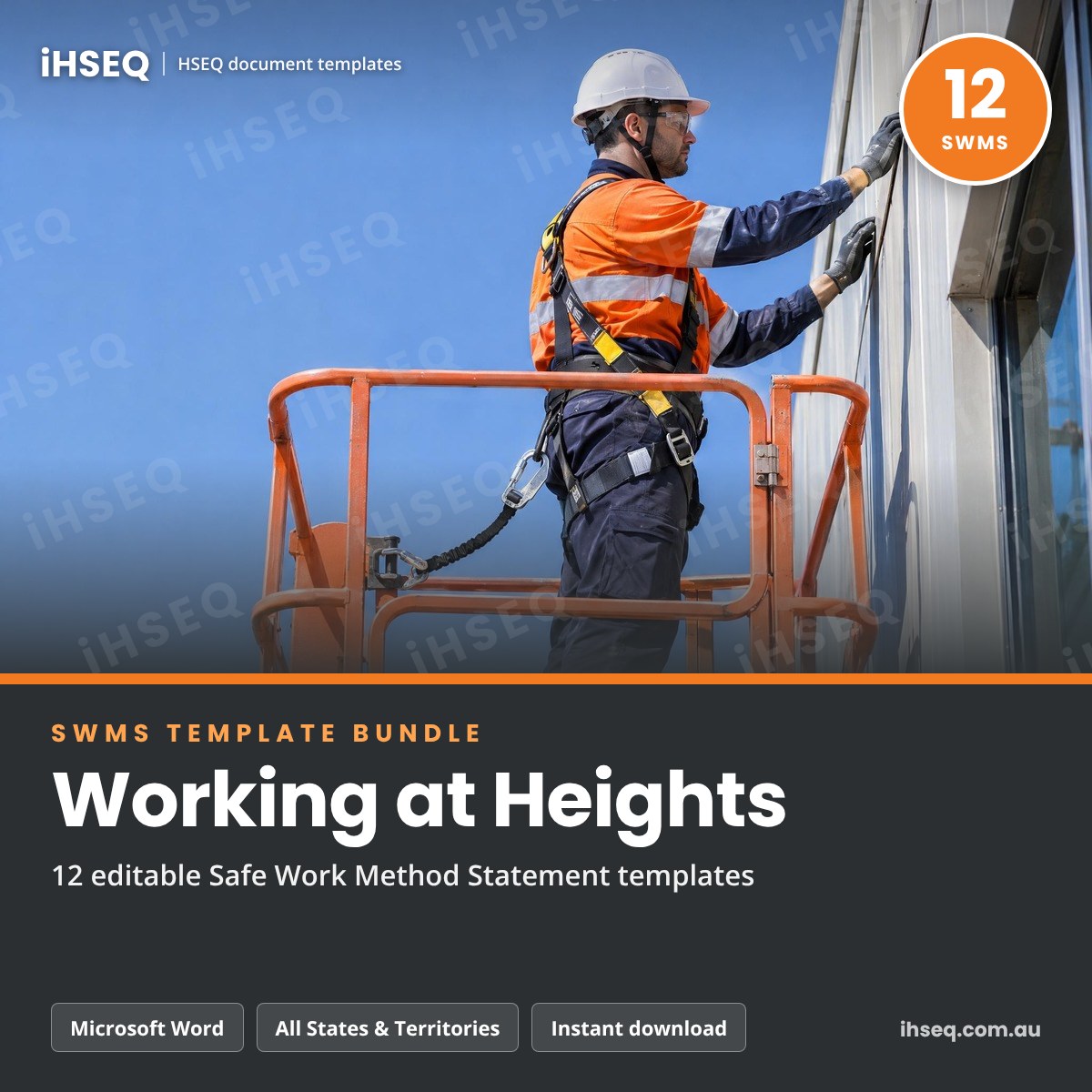
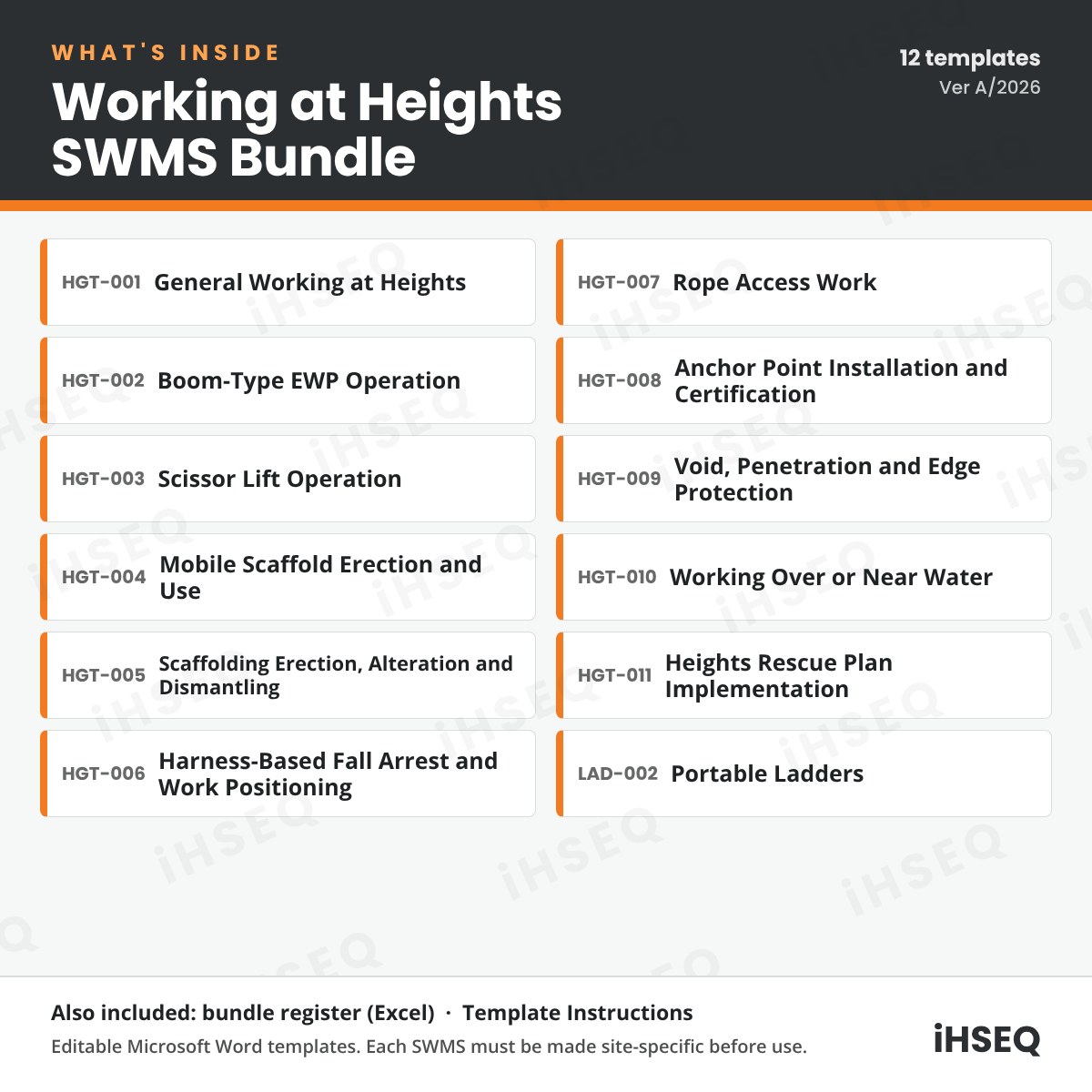
Working at Heights SWMS Bundle – 12 Editable Templates
Original price was: $850.00.$189.00Current price is: $189.00.12 editable SWMS templates for any contractor whose crew works at height, and access specialists. Supplied in Microsoft Word and written against the model WHS Regulation, with the Victorian equivalents noted in each document.
- 12 task-specific Safe Work Method Statement templates
- 12 sequenced job steps in each, with hazards, controls, and initial and residual risk ratings
- Legislation register covering all eight States and Territories
- Bundle register (Excel), Template Instructions and How-to-Use guide included
- Instant download after checkout
These are templates. Each SWMS must be reviewed and made site-specific before use.
Want to see one first? Download the free Portable Ladders SWMS template (it is one of the 12 in this bundle).
Sale!
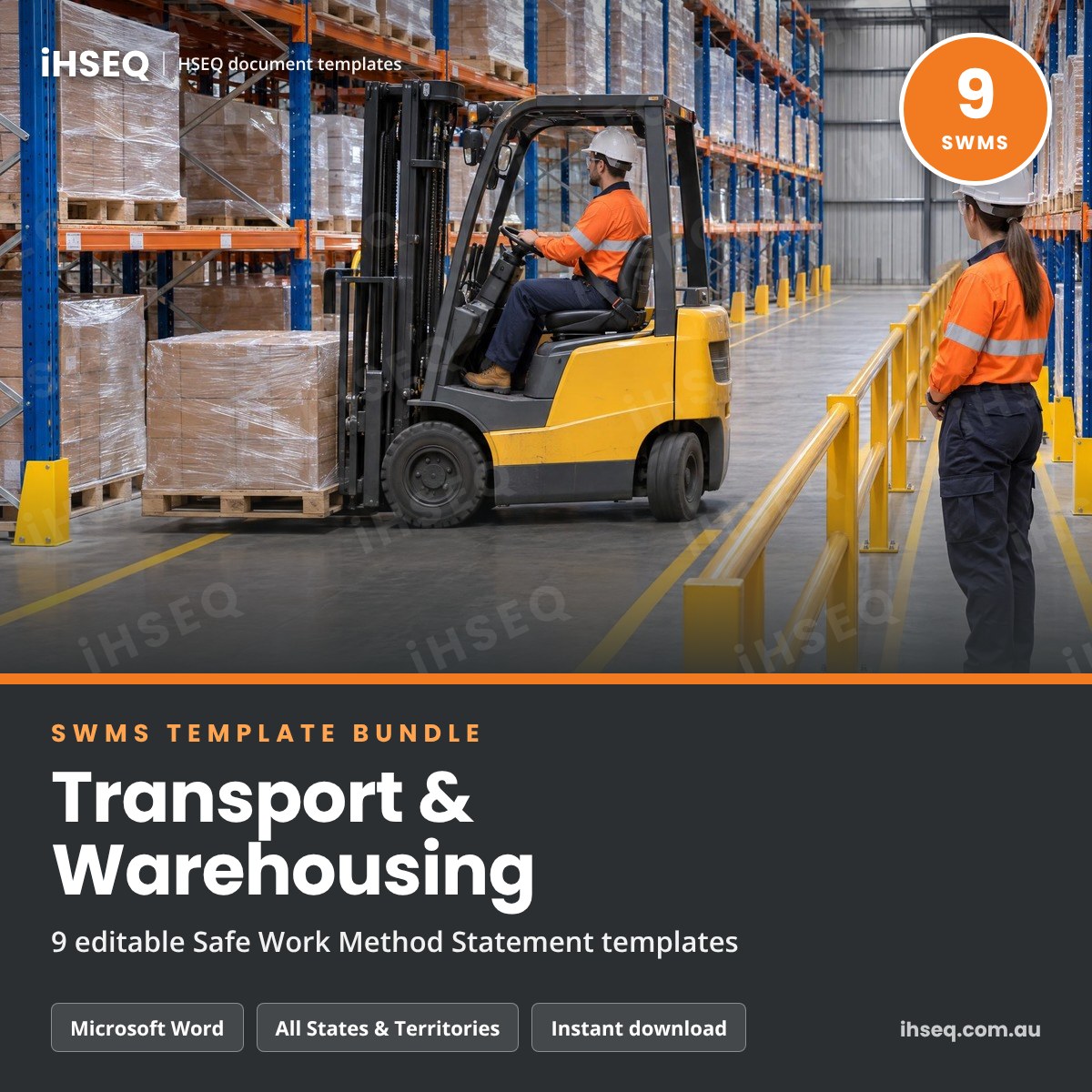
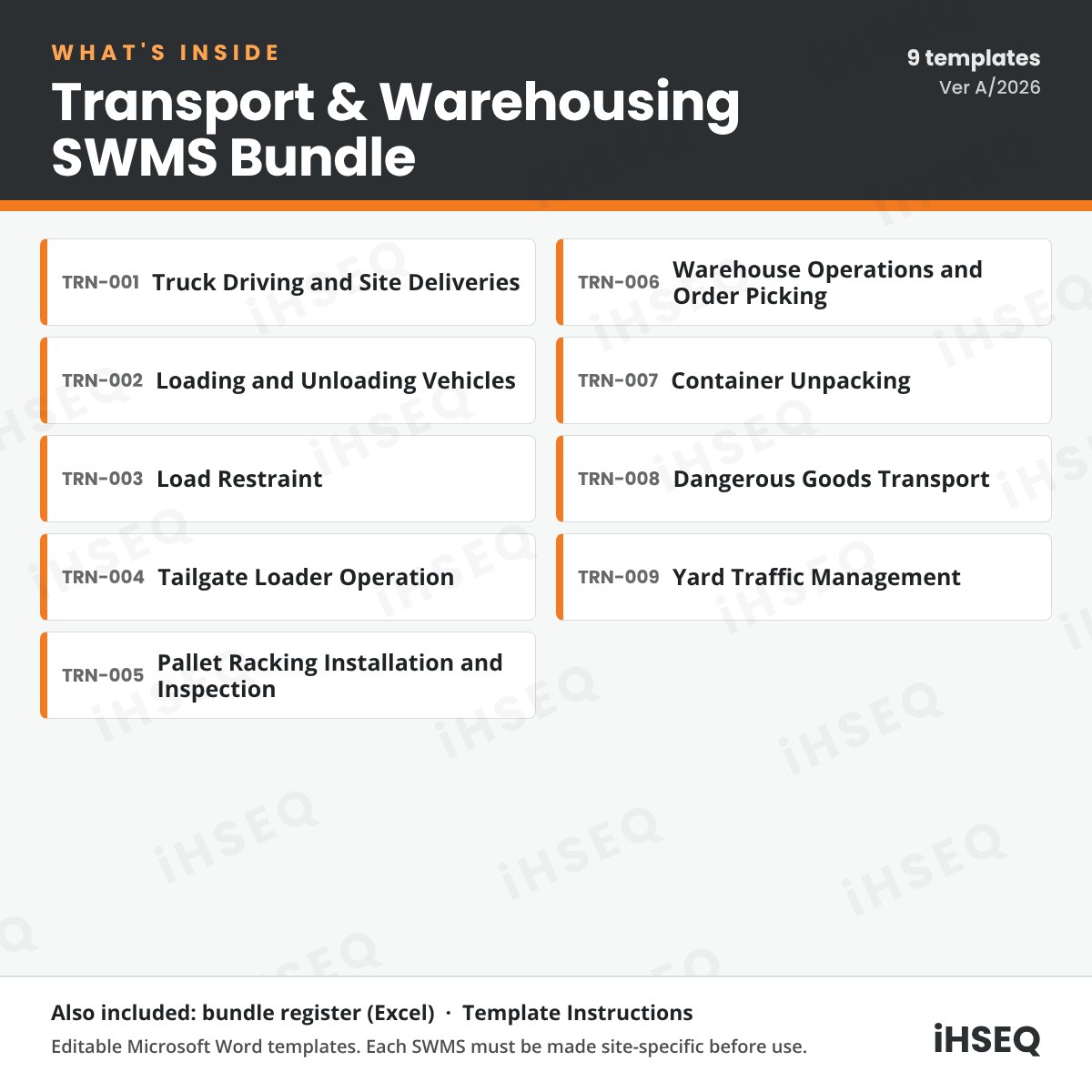
Transport & Warehousing SWMS Bundle – 9 Editable Templates
Original price was: $850.00.$189.00Current price is: $189.00.9 editable SWMS templates for transport operators, delivery drivers and warehouse and logistics operators. Supplied in Microsoft Word and written against the model WHS Regulation, with the Victorian equivalents noted in each document.
- 9 task-specific Safe Work Method Statement templates
- 12 sequenced job steps in each, with hazards, controls, and initial and residual risk ratings
- Legislation register covering all eight States and Territories
- Bundle register (Excel), Template Instructions and How-to-Use guide included
- Instant download after checkout
These are templates. Each SWMS must be reviewed and made site-specific before use.
Want to see one first? Download the free Portable Ladders SWMS template.
Sale!
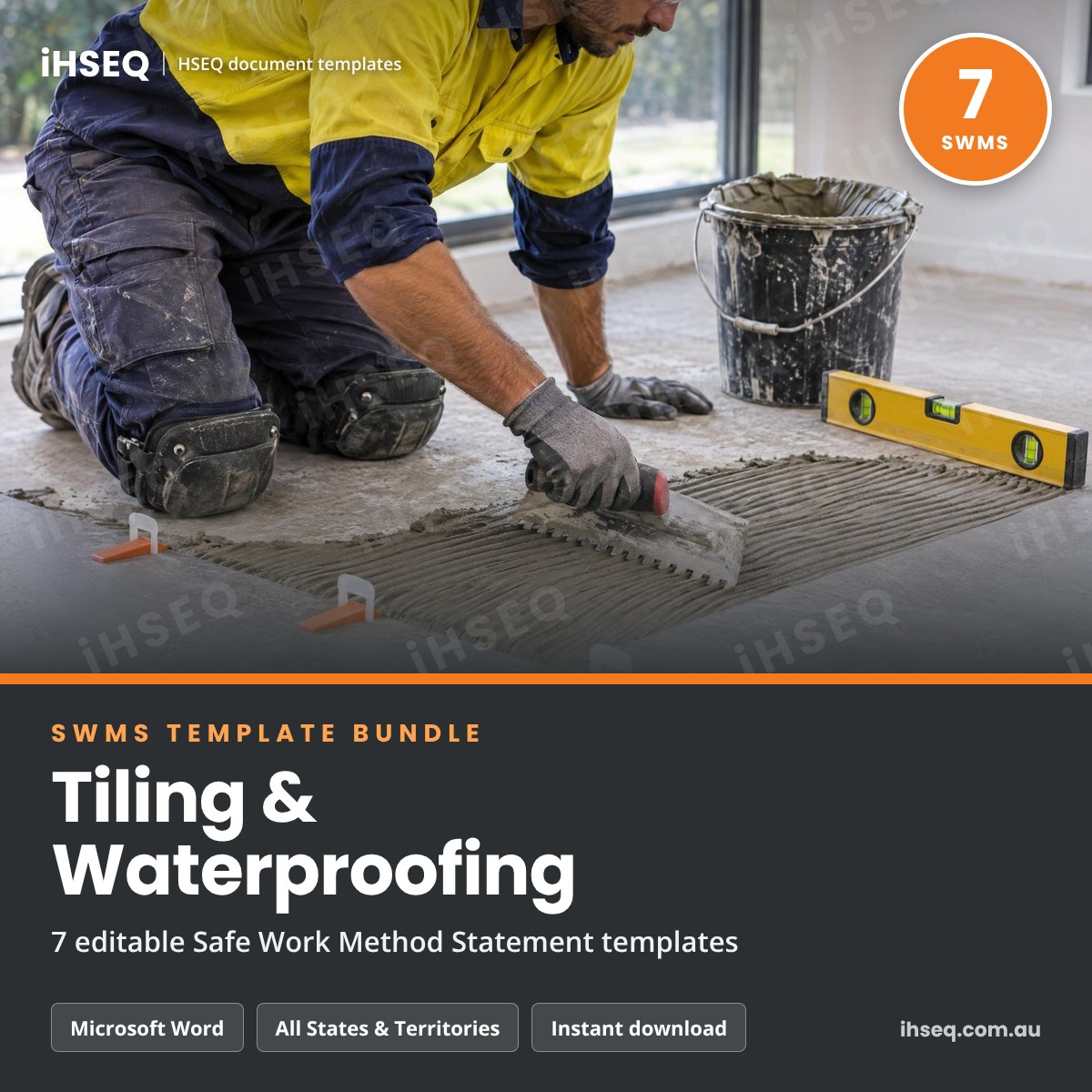
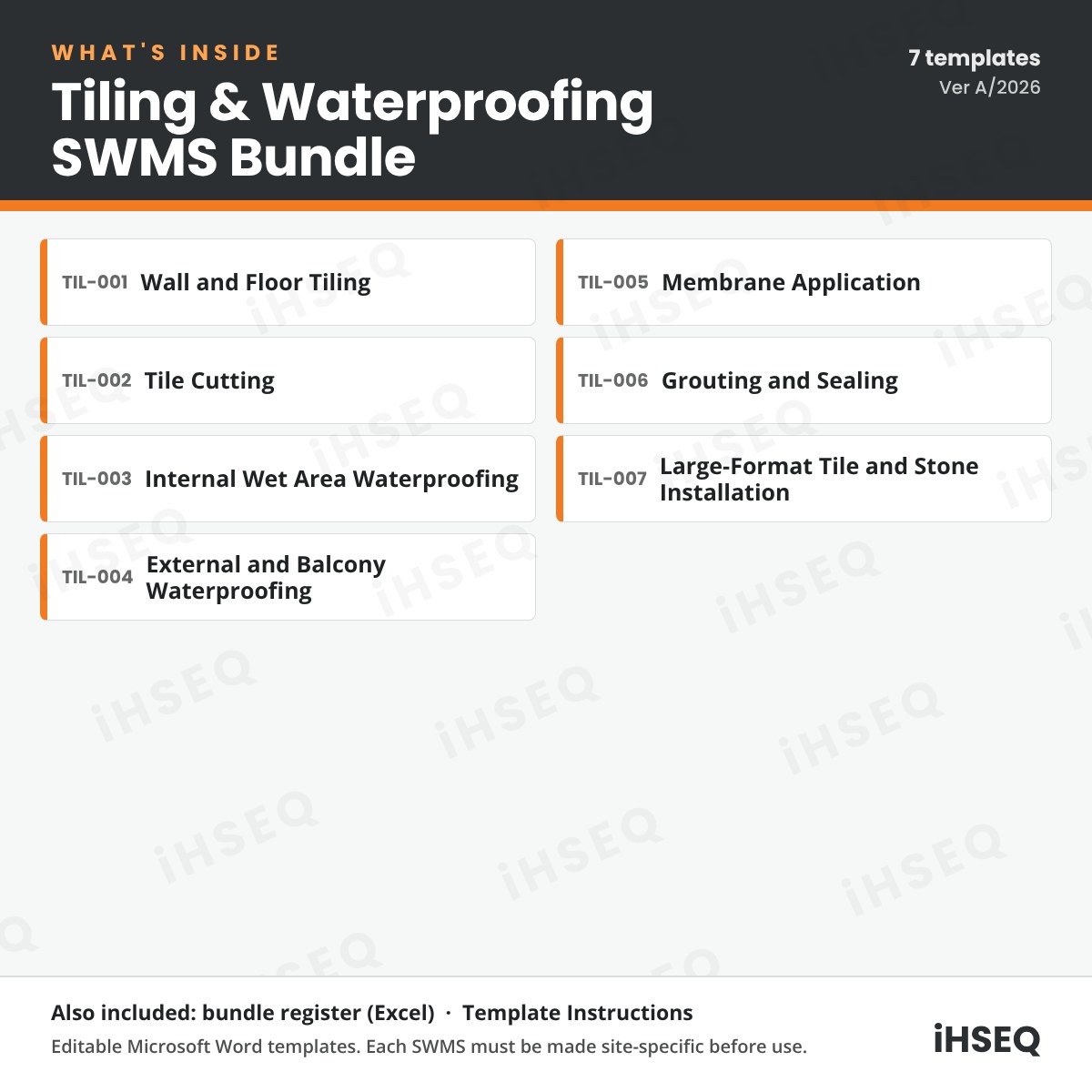
Tiling & Waterproofing SWMS Bundle – 7 Editable Templates
Original price was: $850.00.$189.00Current price is: $189.00.7 editable SWMS templates for wall and floor tilers and waterproofers. Supplied in Microsoft Word and written against the model WHS Regulation, with the Victorian equivalents noted in each document.
- 7 task-specific Safe Work Method Statement templates
- 12 sequenced job steps in each, with hazards, controls, and initial and residual risk ratings
- Legislation register covering all eight States and Territories
- Bundle register (Excel), Template Instructions and How-to-Use guide included
- Instant download after checkout
These are templates. Each SWMS must be reviewed and made site-specific before use.
Want to see one first? Download the free Portable Ladders SWMS template.
Sale!
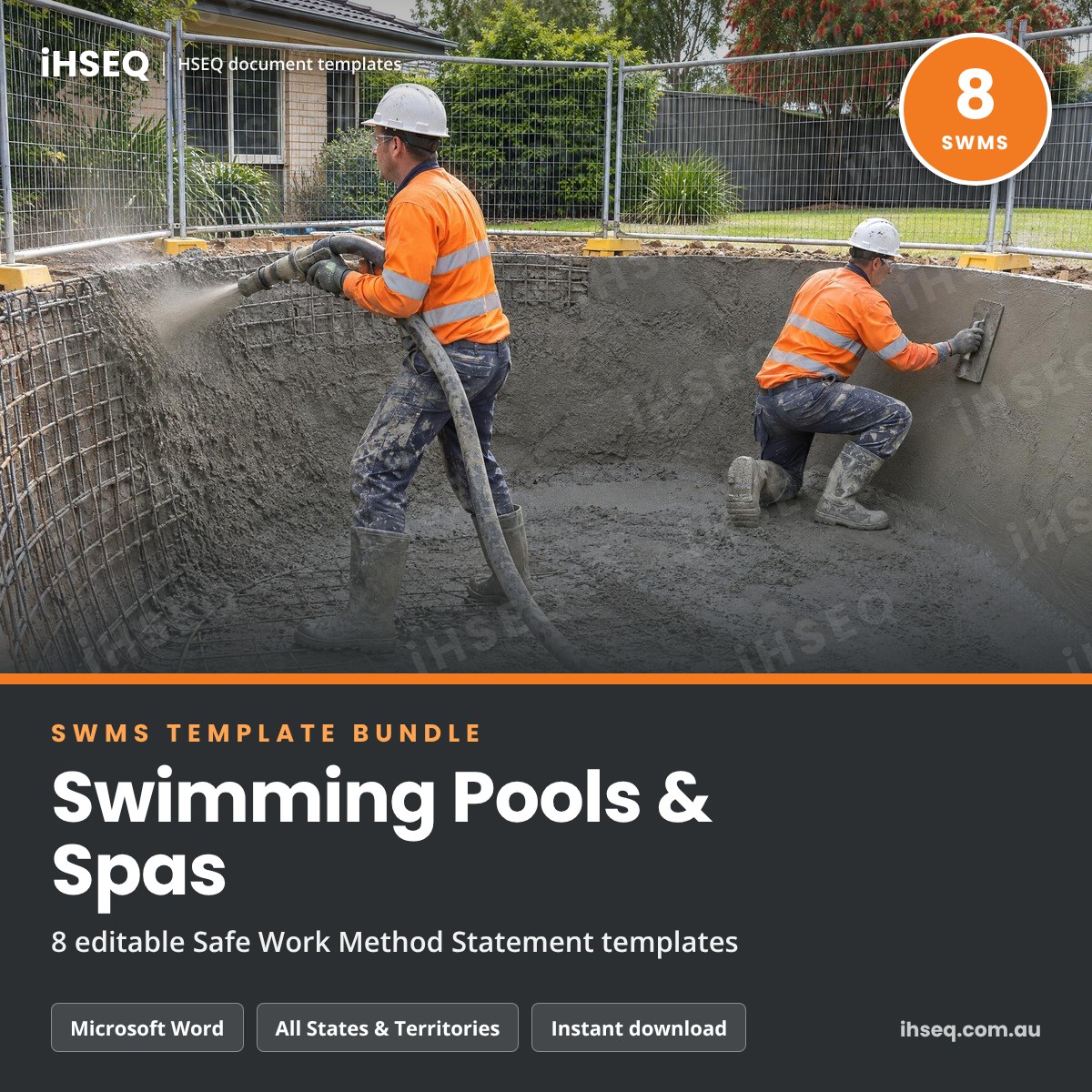
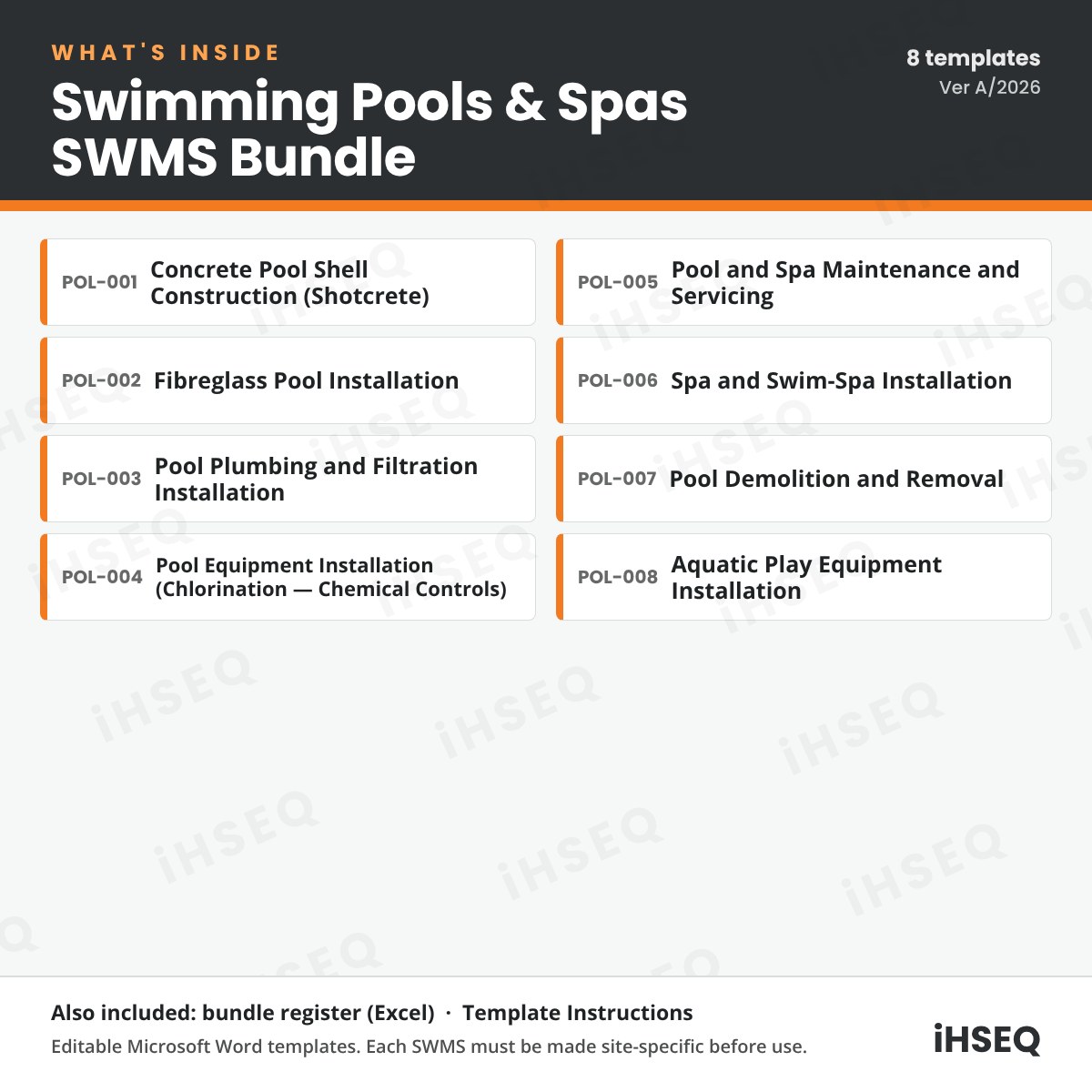
Swimming Pools & Spas SWMS Bundle – 8 Editable Templates
Original price was: $850.00.$189.00Current price is: $189.00.8 editable SWMS templates for pool builders, pool technicians and spa installers. Supplied in Microsoft Word and written against the model WHS Regulation, with the Victorian equivalents noted in each document.
- 8 task-specific Safe Work Method Statement templates
- 12 sequenced job steps in each, with hazards, controls, and initial and residual risk ratings
- Legislation register covering all eight States and Territories
- Bundle register (Excel), Template Instructions and How-to-Use guide included
- Instant download after checkout
These are templates. Each SWMS must be reviewed and made site-specific before use.
Want to see one first? Download the free Portable Ladders SWMS template.
Sale!
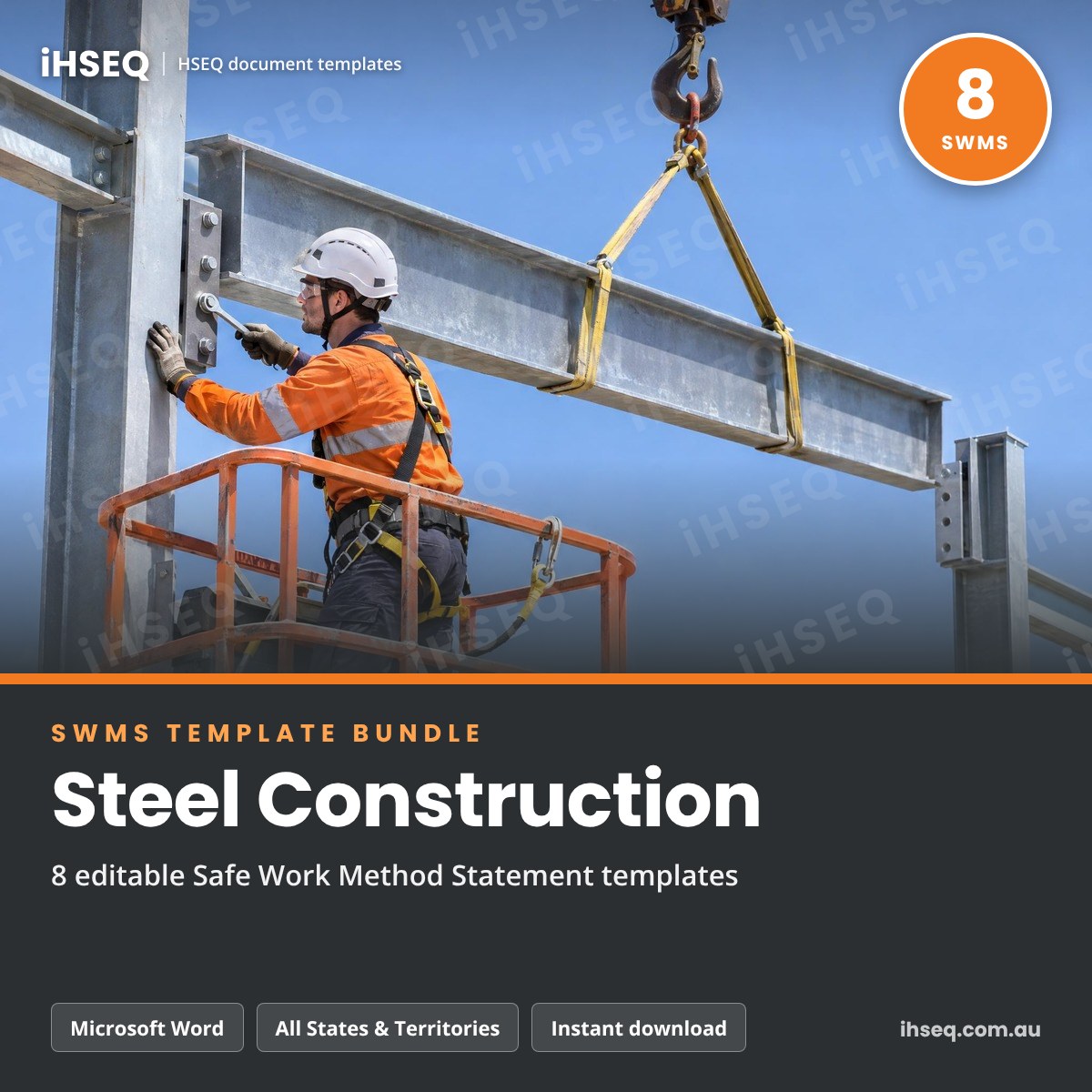
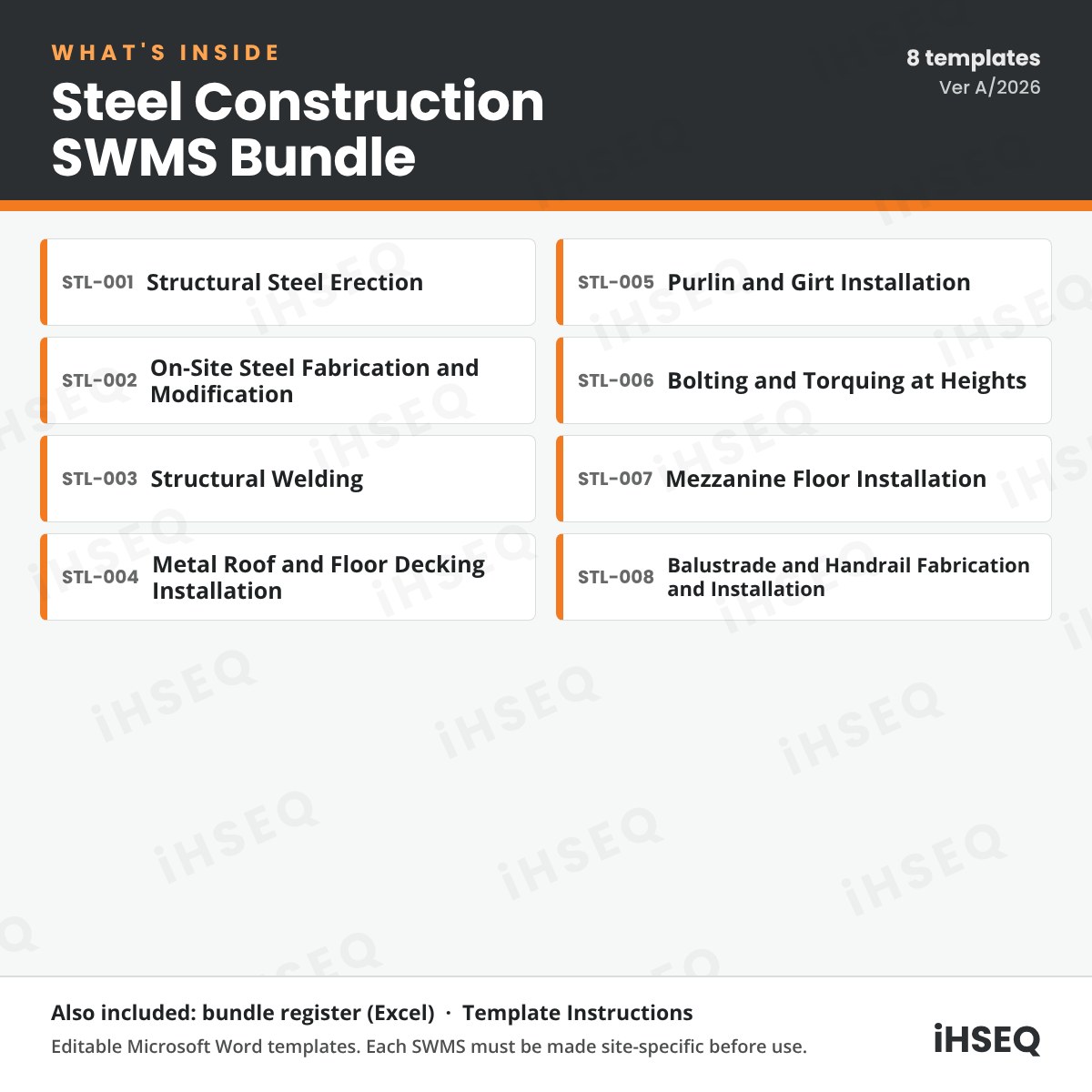
Steel Construction SWMS Bundle – 8 Editable Templates
Original price was: $850.00.$189.00Current price is: $189.00.8 editable SWMS templates for steel erectors, riggers, fabricators and shed builders. Supplied in Microsoft Word and written against the model WHS Regulation, with the Victorian equivalents noted in each document.
- 8 task-specific Safe Work Method Statement templates
- 12 sequenced job steps in each, with hazards, controls, and initial and residual risk ratings
- Legislation register covering all eight States and Territories
- Bundle register (Excel), Template Instructions and How-to-Use guide included
- Instant download after checkout
These are templates. Each SWMS must be reviewed and made site-specific before use.
Want to see one first? Download the free Portable Ladders SWMS template.
Sale!
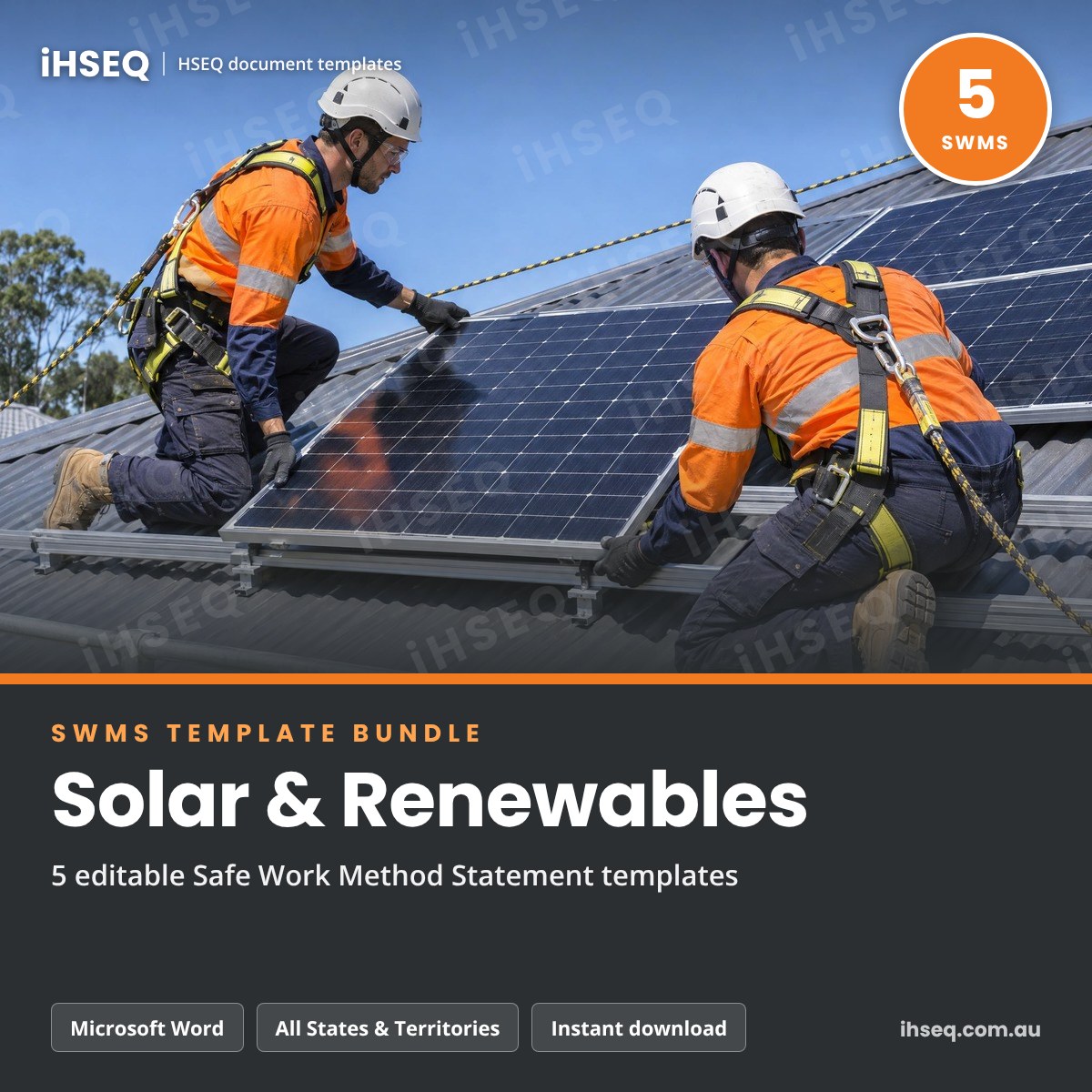
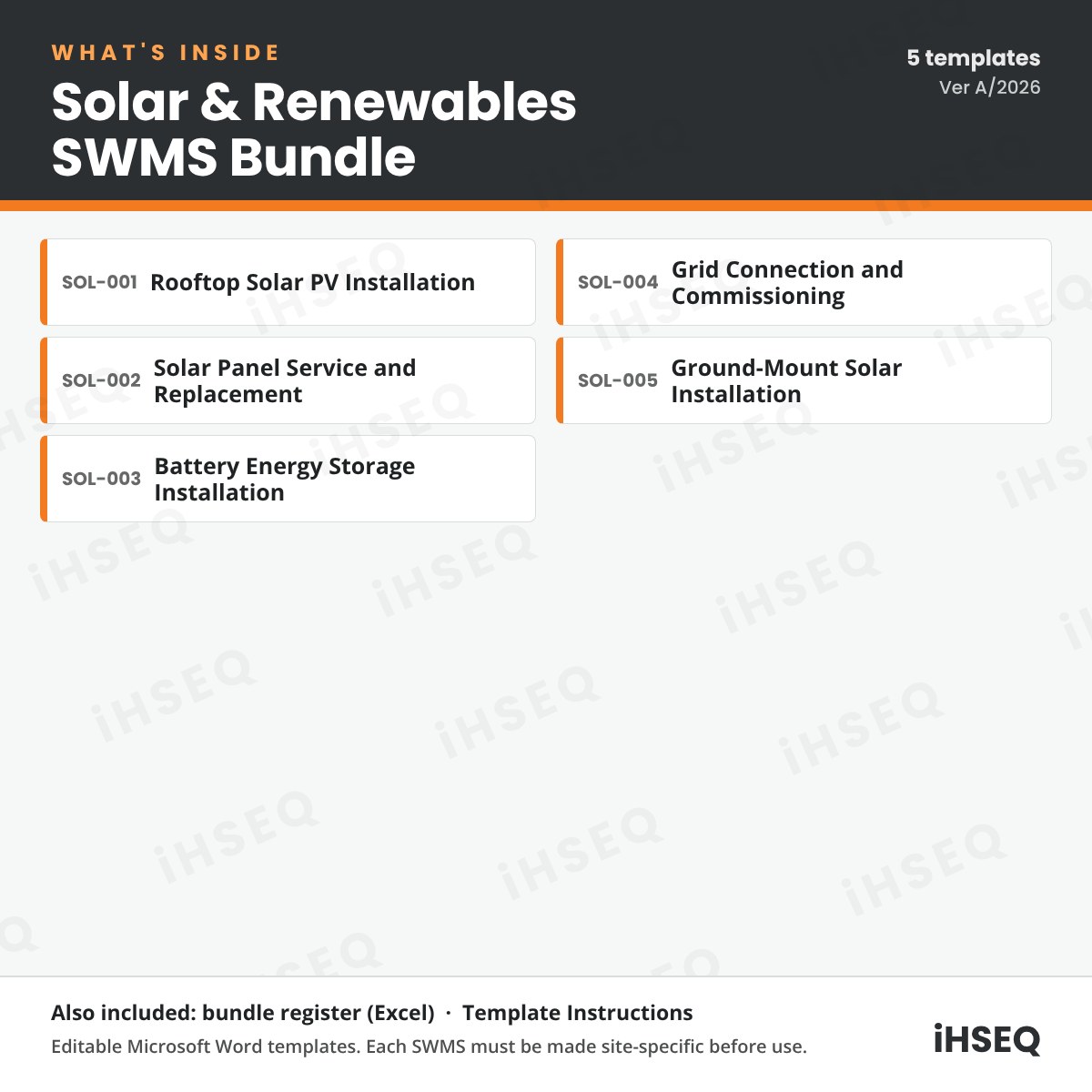
Solar & Renewables SWMS Bundle – 5 Editable Templates
Original price was: $850.00.$189.00Current price is: $189.00.5 editable SWMS templates for solar installers, electricians and battery installers. Supplied in Microsoft Word and written against the model WHS Regulation, with the Victorian equivalents noted in each document.
- 5 task-specific Safe Work Method Statement templates
- 12 sequenced job steps in each, with hazards, controls, and initial and residual risk ratings
- Legislation register covering all eight States and Territories
- Bundle register (Excel), Template Instructions and How-to-Use guide included
- Instant download after checkout
These are templates. Each SWMS must be reviewed and made site-specific before use.
Want to see one first? Download the free Portable Ladders SWMS template.
Sale!
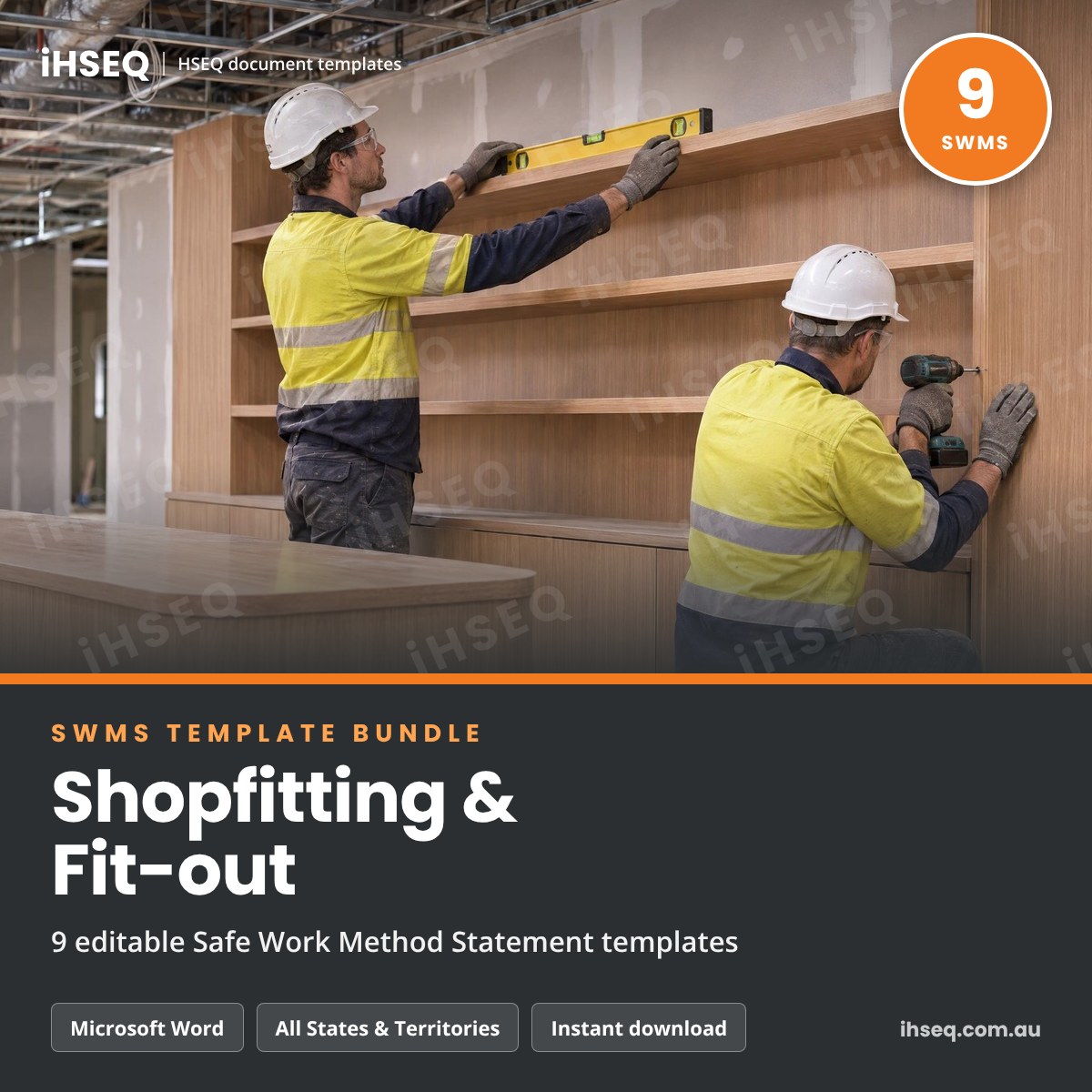
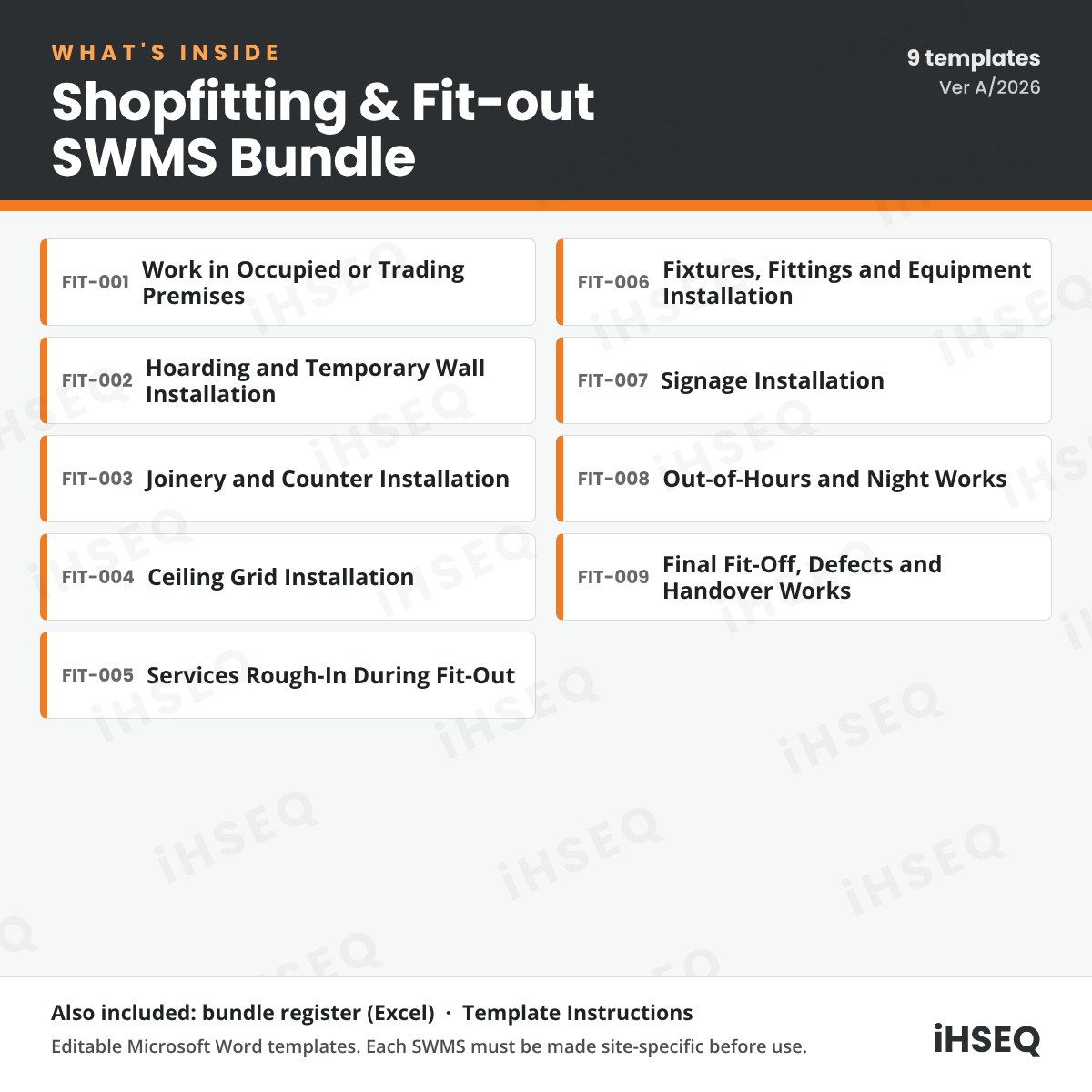
Shopfitting & Fit-out SWMS Bundle – 9 Editable Templates
Original price was: $850.00.$189.00Current price is: $189.00.9 editable SWMS templates for shopfitters, fit-out contractors and retail maintenance crews. Supplied in Microsoft Word and written against the model WHS Regulation, with the Victorian equivalents noted in each document.
- 9 task-specific Safe Work Method Statement templates
- 12 sequenced job steps in each, with hazards, controls, and initial and residual risk ratings
- Legislation register covering all eight States and Territories
- Bundle register (Excel), Template Instructions and How-to-Use guide included
- Instant download after checkout
These are templates. Each SWMS must be reviewed and made site-specific before use.
Want to see one first? Download the free Portable Ladders SWMS template.
Sale!
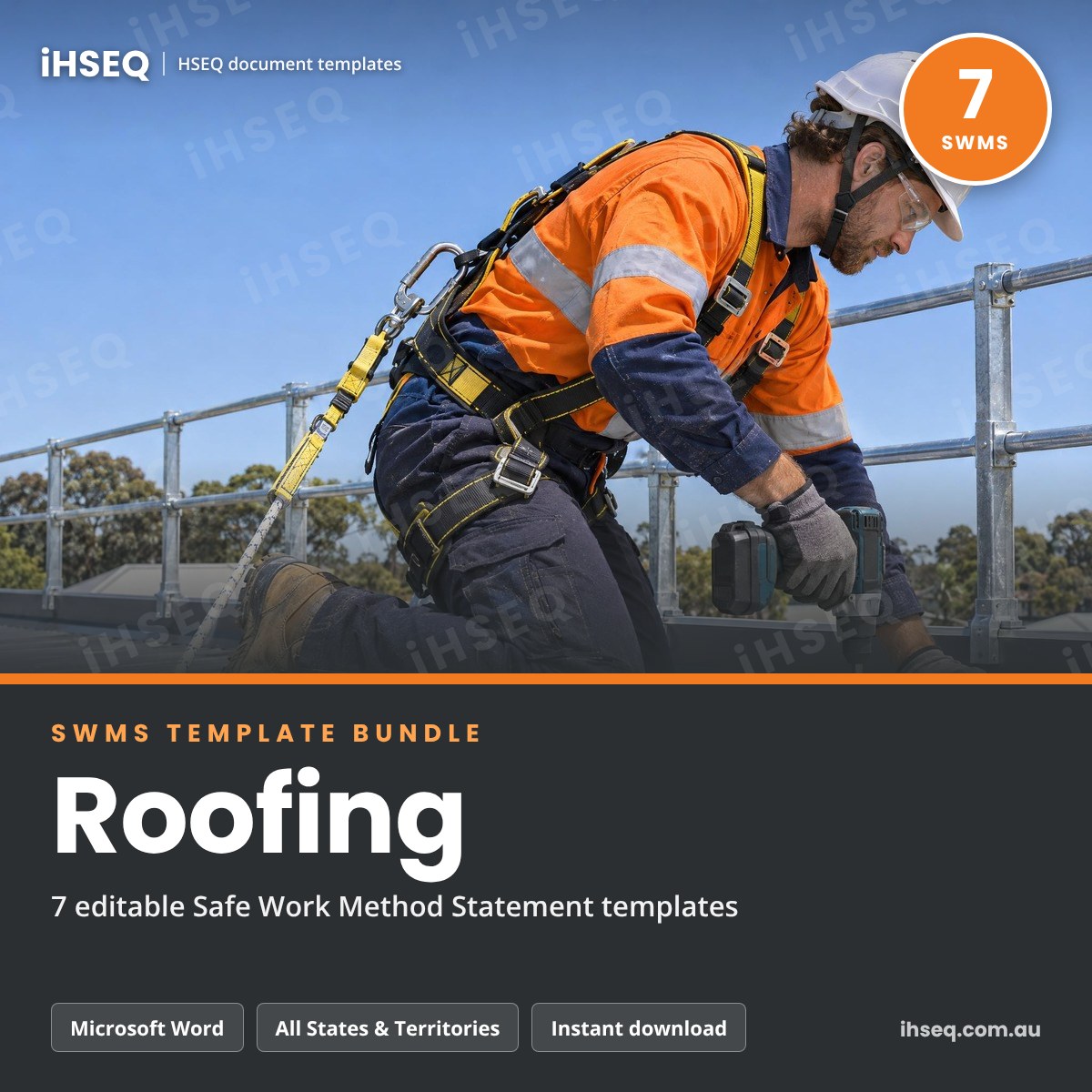
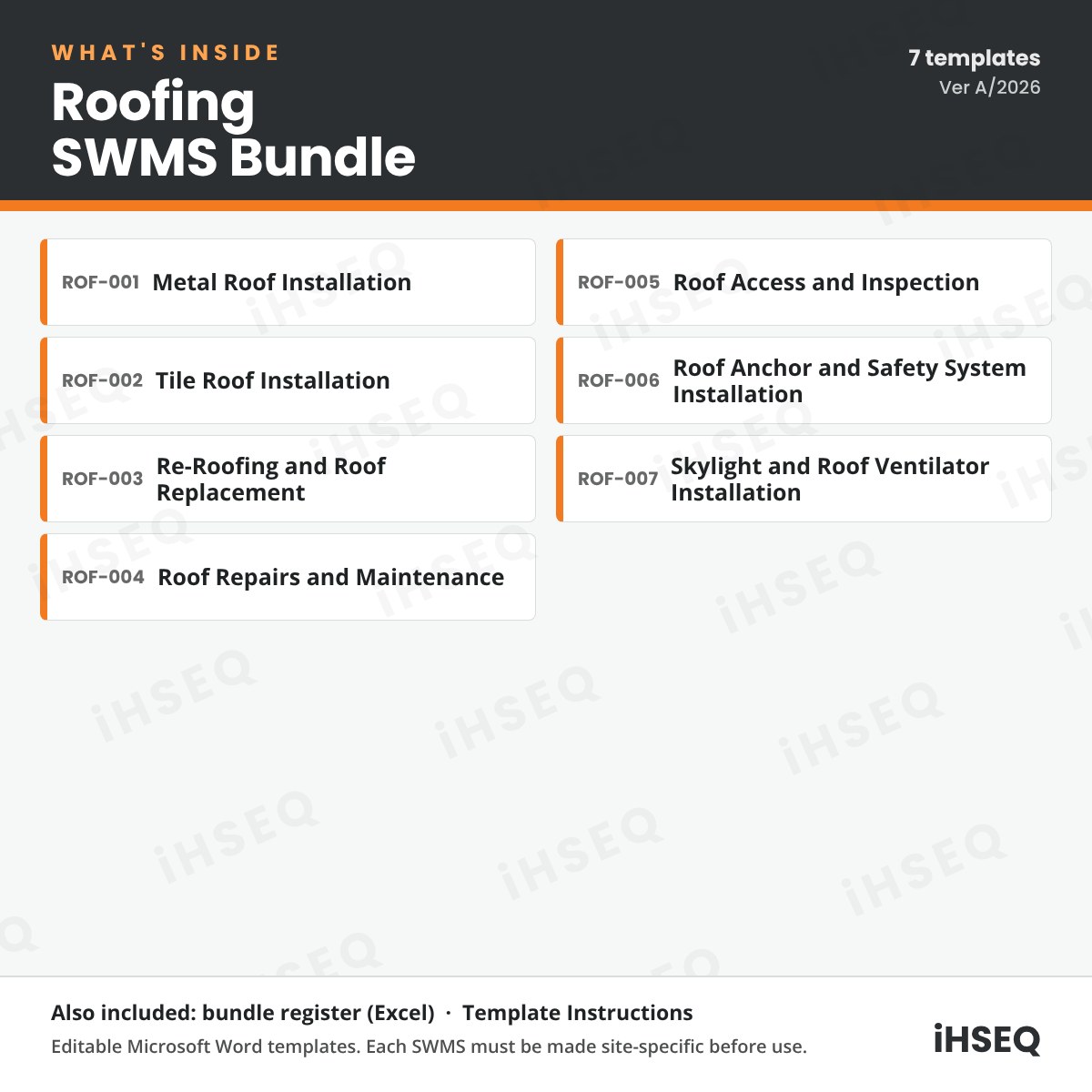
Roofing SWMS Bundle – 7 Editable Templates
Original price was: $850.00.$189.00Current price is: $189.00.7 editable SWMS templates for roofers, roof tilers, re-roofing contractors and roof inspectors. Supplied in Microsoft Word and written against the model WHS Regulation, with the Victorian equivalents noted in each document.
- 7 task-specific Safe Work Method Statement templates
- 12 sequenced job steps in each, with hazards, controls, and initial and residual risk ratings
- Legislation register covering all eight States and Territories
- Bundle register (Excel), Template Instructions and How-to-Use guide included
- Instant download after checkout
These are templates. Each SWMS must be reviewed and made site-specific before use.
Want to see one first? Download the free Portable Ladders SWMS template.
Sale!
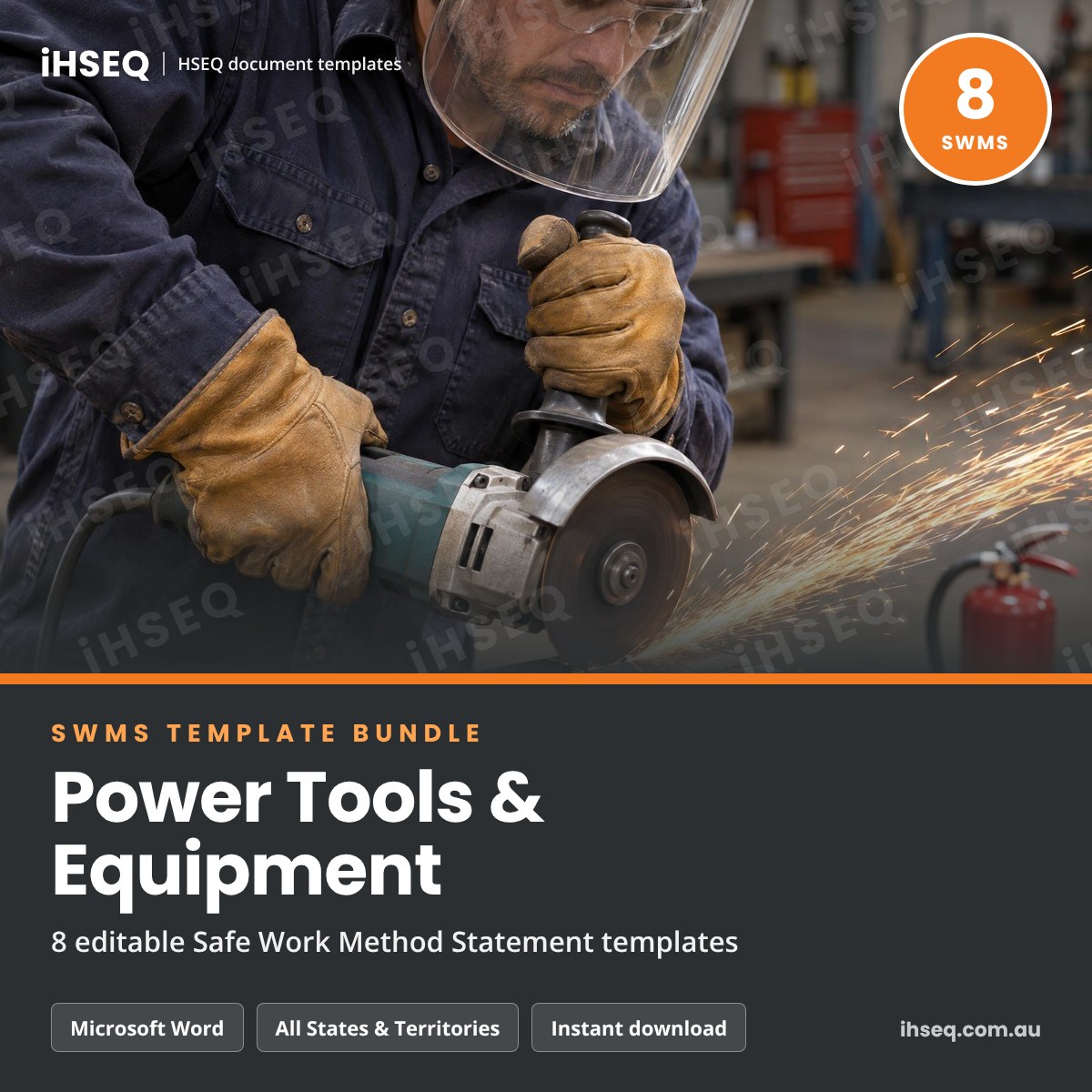
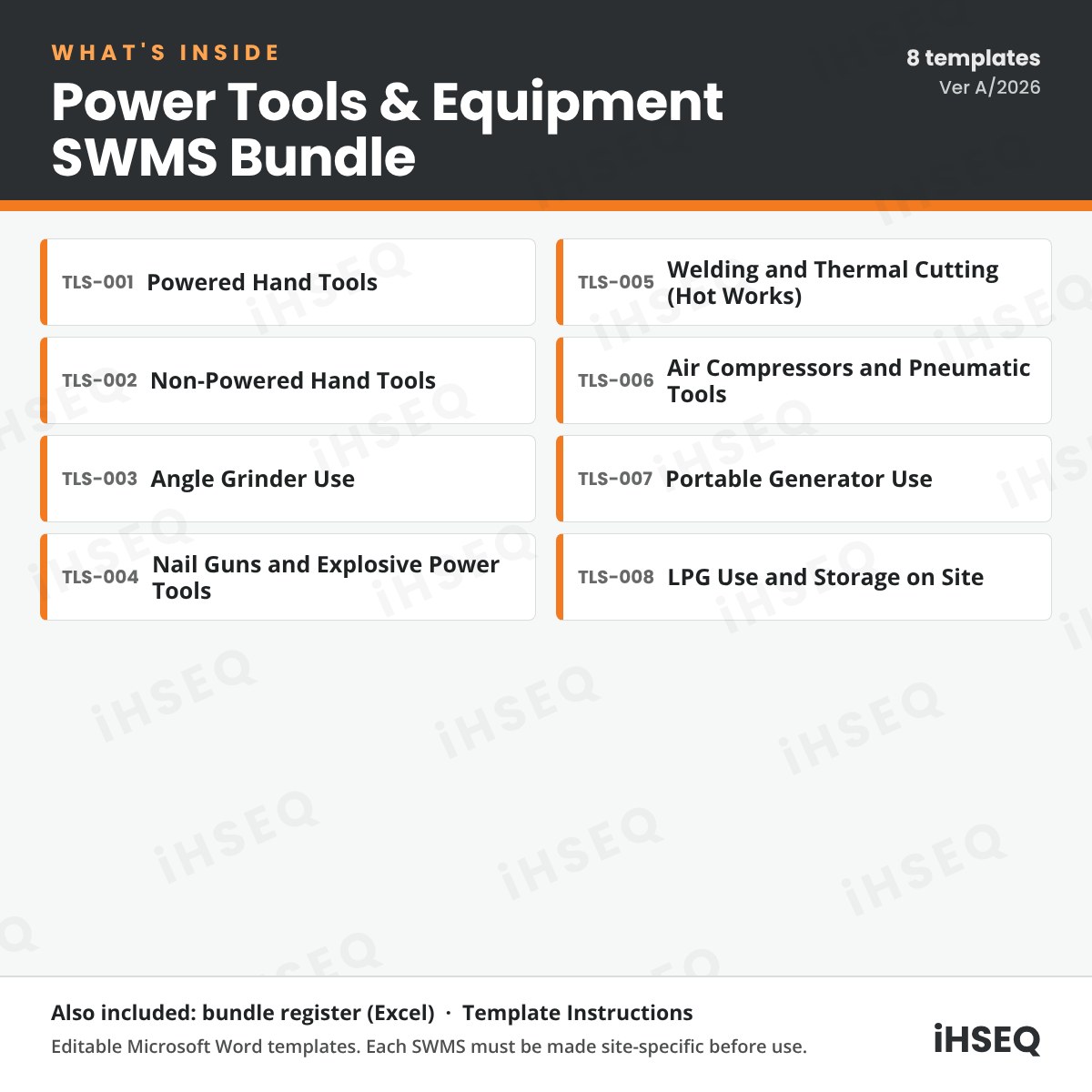
Power Tools & Equipment SWMS Bundle – 8 Editable Templates
Original price was: $850.00.$189.00Current price is: $189.00.8 editable SWMS templates for any trade that needs task documents for the tools on its site. Supplied in Microsoft Word and written against the model WHS Regulation, with the Victorian equivalents noted in each document.
- 8 task-specific Safe Work Method Statement templates
- 12 sequenced job steps in each, with hazards, controls, and initial and residual risk ratings
- Legislation register covering all eight States and Territories
- Bundle register (Excel), Template Instructions and How-to-Use guide included
- Instant download after checkout
These are templates. Each SWMS must be reviewed and made site-specific before use.
Want to see one first? Download the free Portable Ladders SWMS template.
Sale!
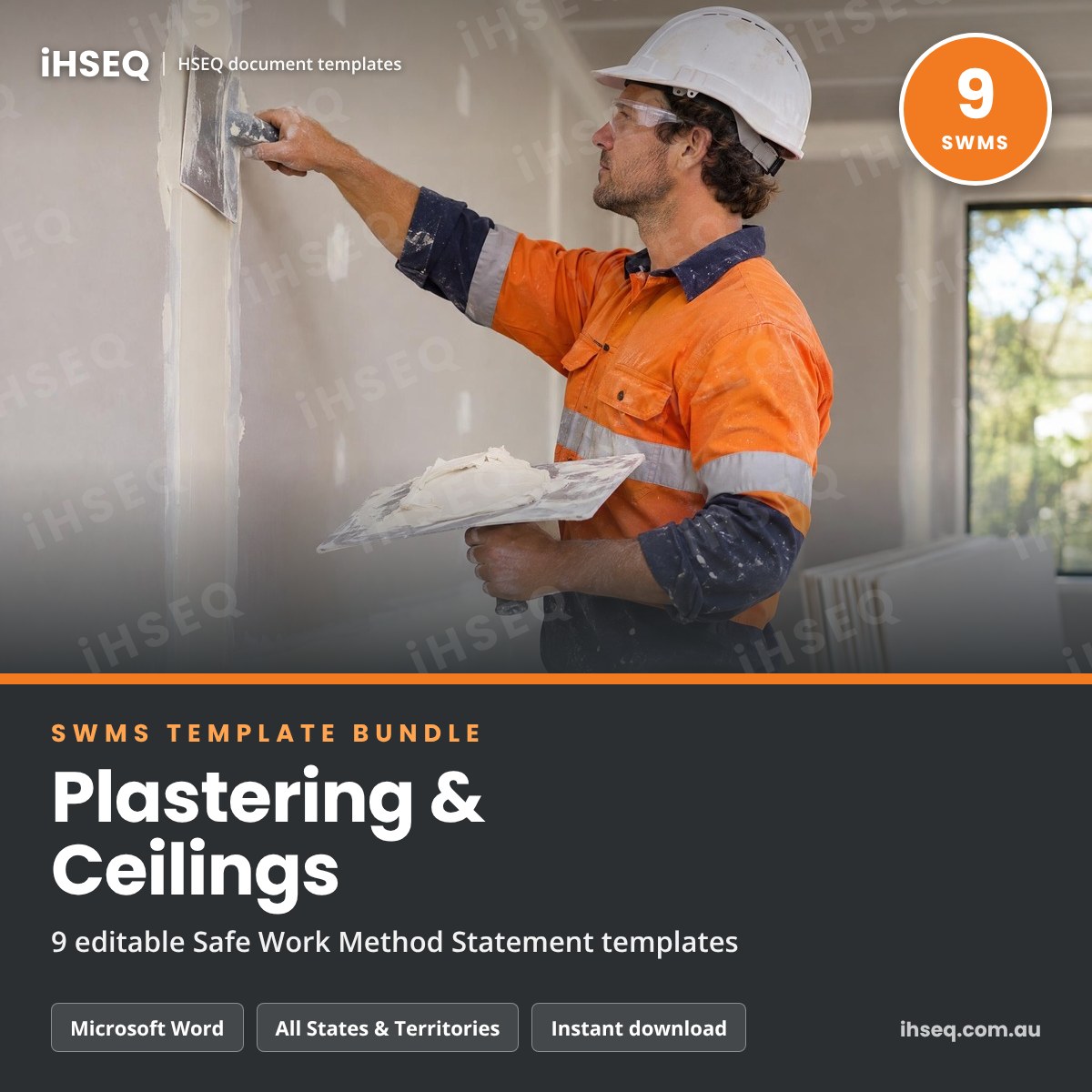
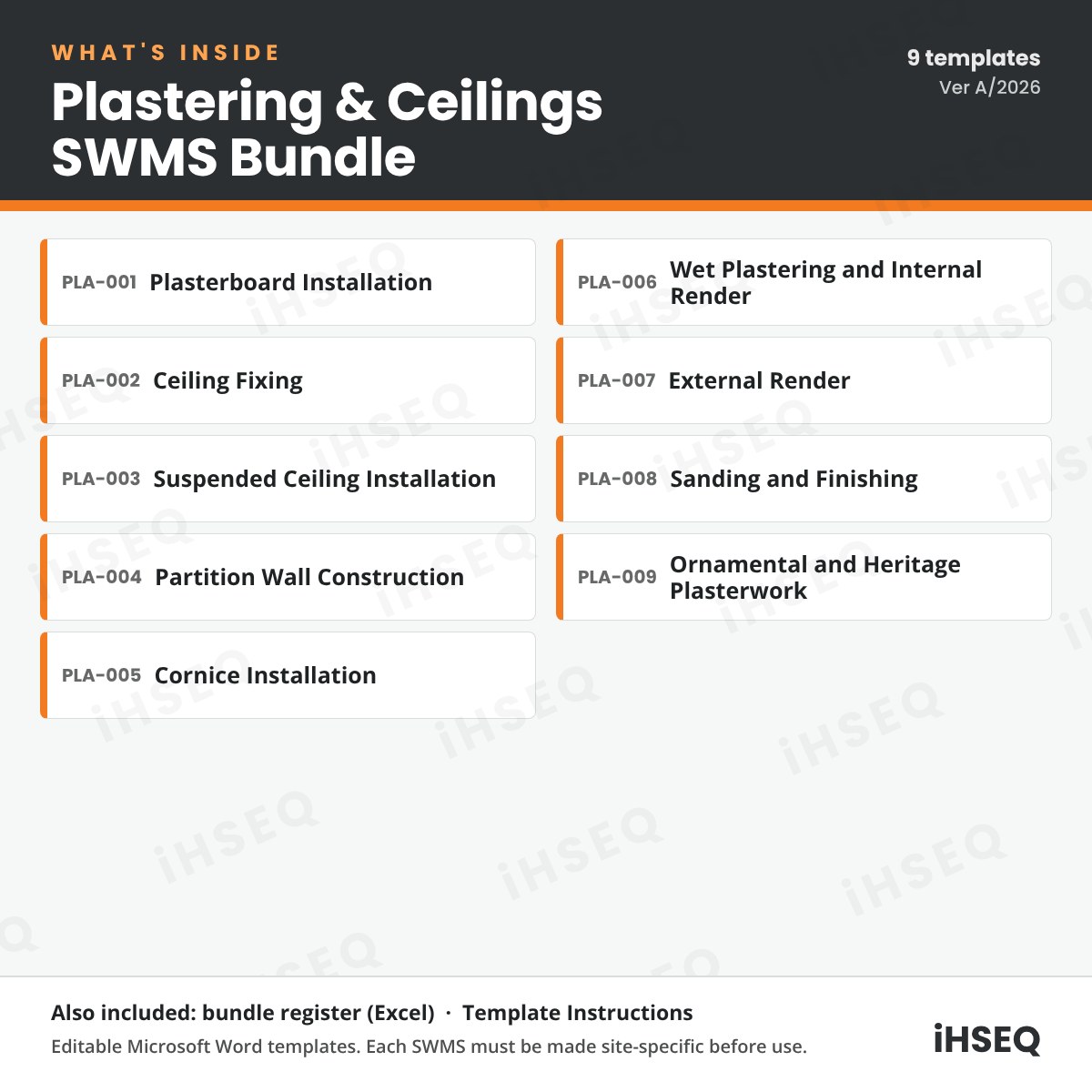
Plastering & Ceilings SWMS Bundle – 9 Editable Templates
Original price was: $850.00.$189.00Current price is: $189.00.9 editable SWMS templates for plasterers, ceiling fixers, renderers and partition installers. Supplied in Microsoft Word and written against the model WHS Regulation, with the Victorian equivalents noted in each document.
- 9 task-specific Safe Work Method Statement templates
- 12 sequenced job steps in each, with hazards, controls, and initial and residual risk ratings
- Legislation register covering all eight States and Territories
- Bundle register (Excel), Template Instructions and How-to-Use guide included
- Instant download after checkout
These are templates. Each SWMS must be reviewed and made site-specific before use.
Want to see one first? Download the free Portable Ladders SWMS template.
Sale!
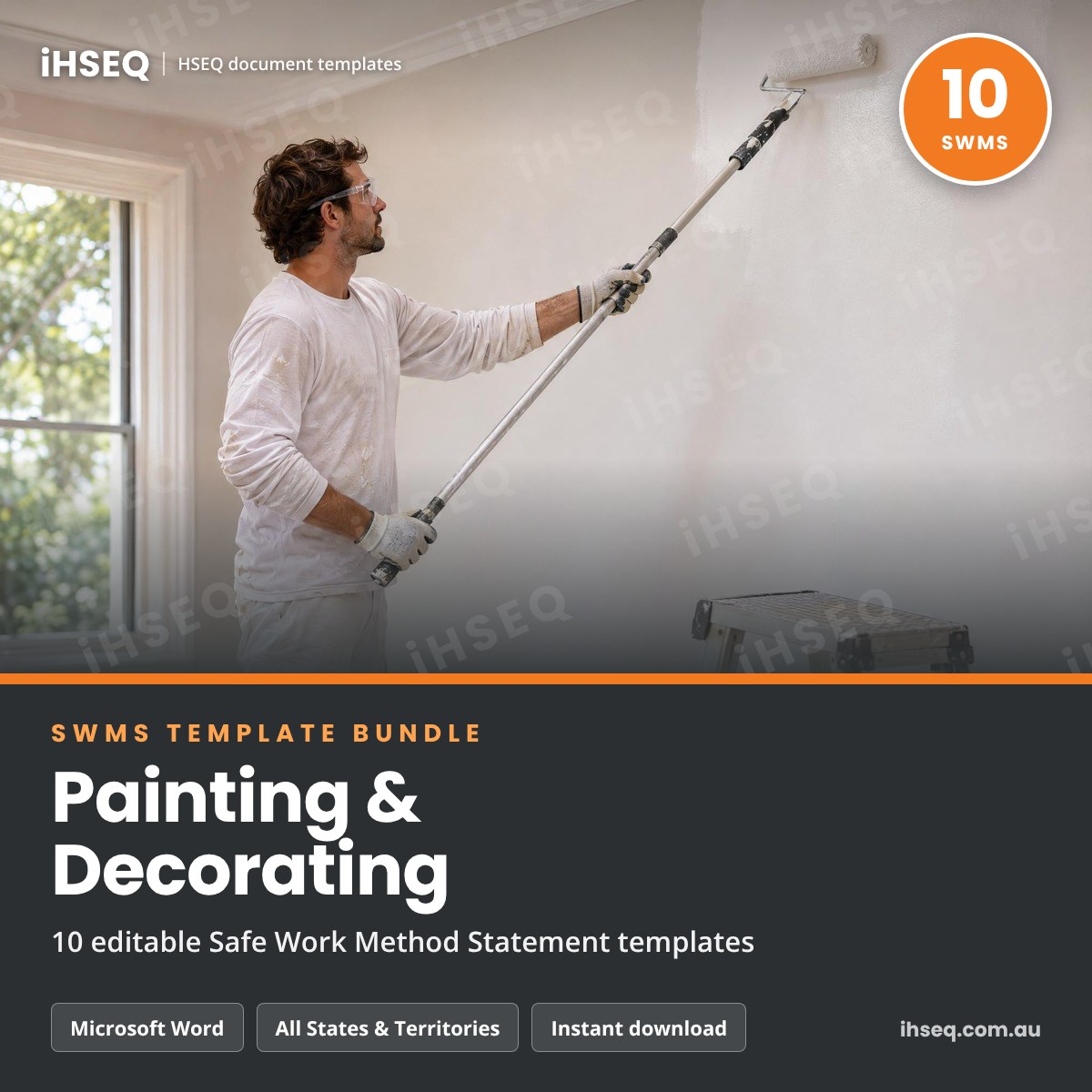
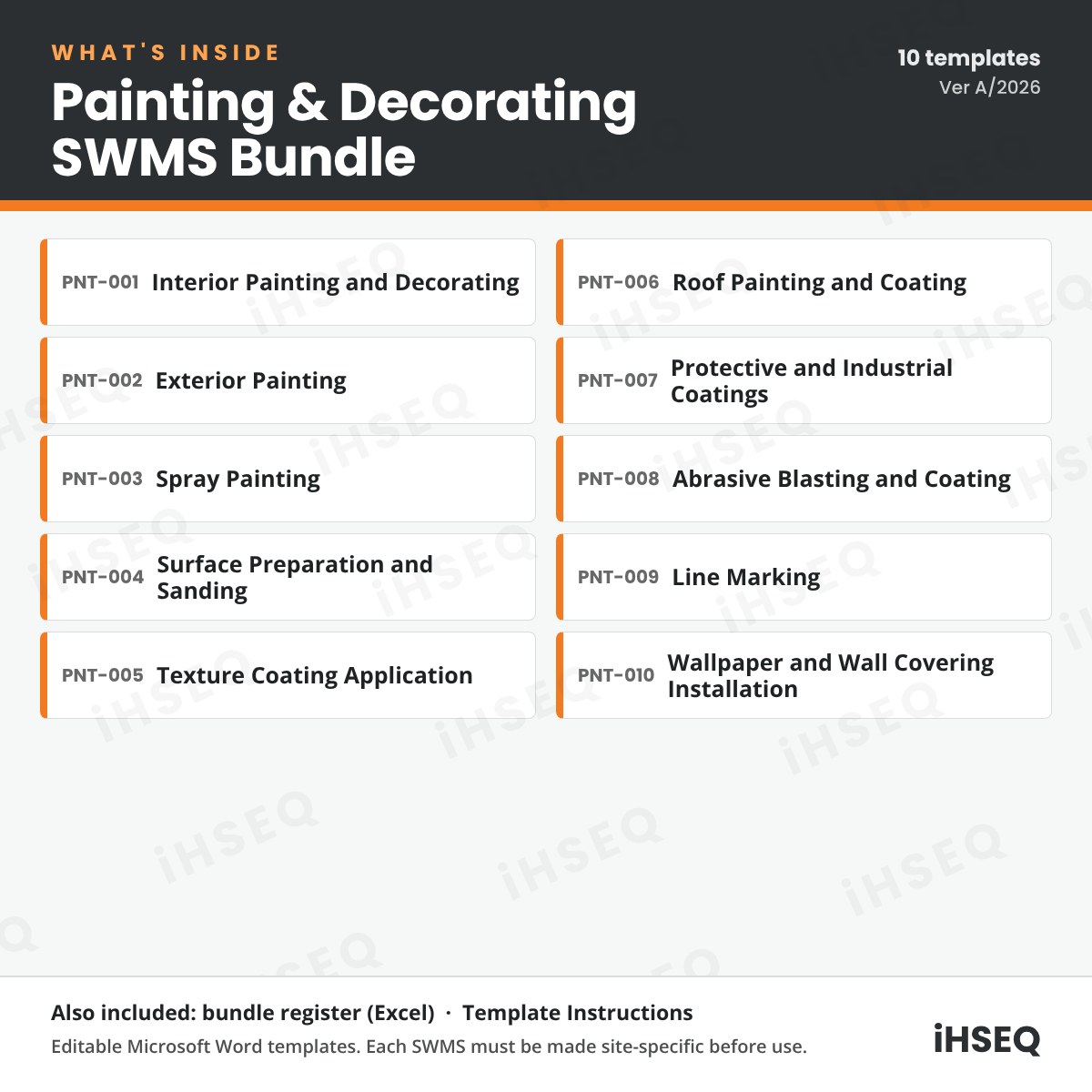
Painting & Decorating SWMS Bundle – 10 Editable Templates
Original price was: $850.00.$189.00Current price is: $189.00.10 editable SWMS templates for painters and decorators, industrial coating applicators and line markers. Supplied in Microsoft Word and written against the model WHS Regulation, with the Victorian equivalents noted in each document.
- 10 task-specific Safe Work Method Statement templates
- 12 sequenced job steps in each, with hazards, controls, and initial and residual risk ratings
- Legislation register covering all eight States and Territories
- Bundle register (Excel), Template Instructions and How-to-Use guide included
- Instant download after checkout
These are templates. Each SWMS must be reviewed and made site-specific before use.
Want to see one first? Download the free Portable Ladders SWMS template.
Sale!
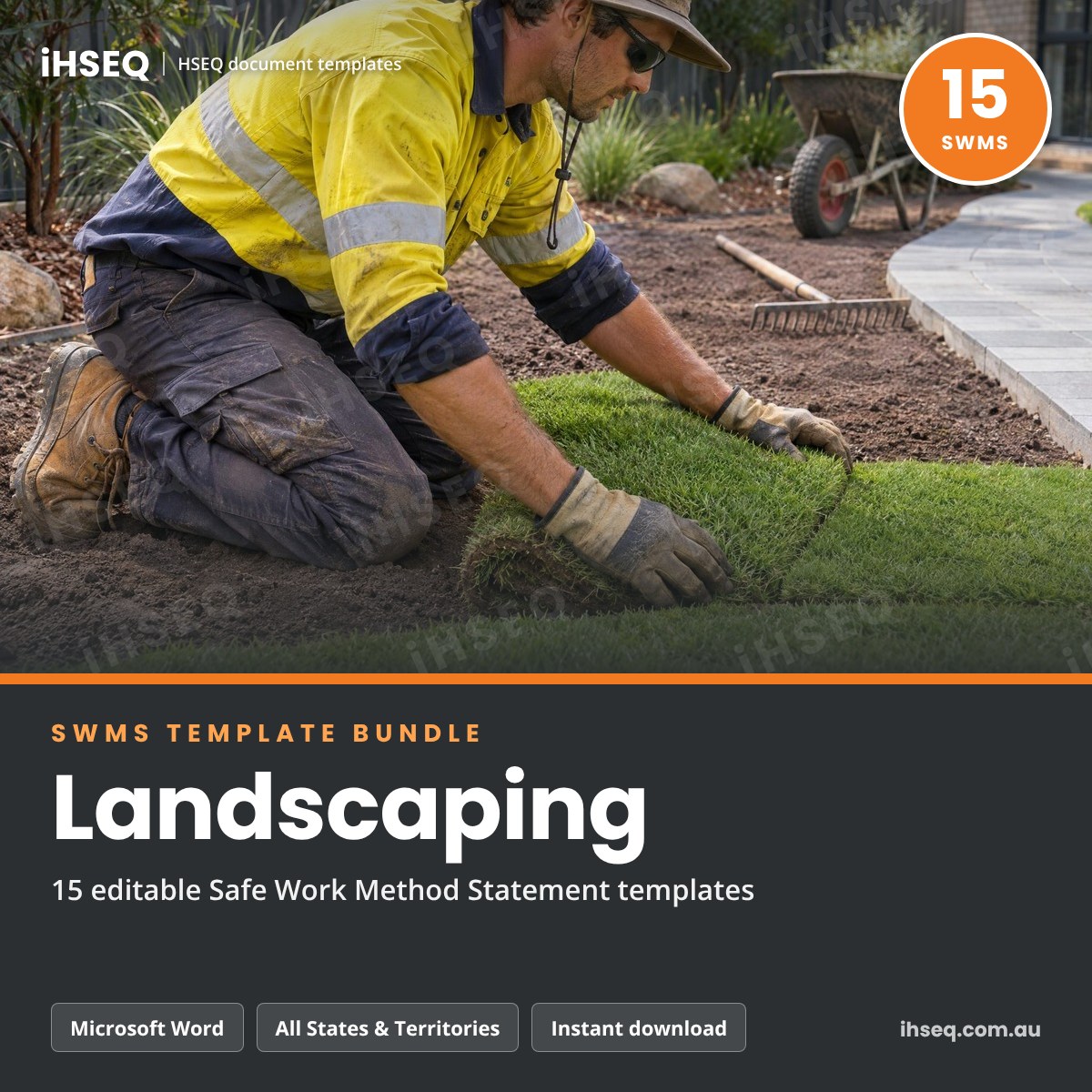
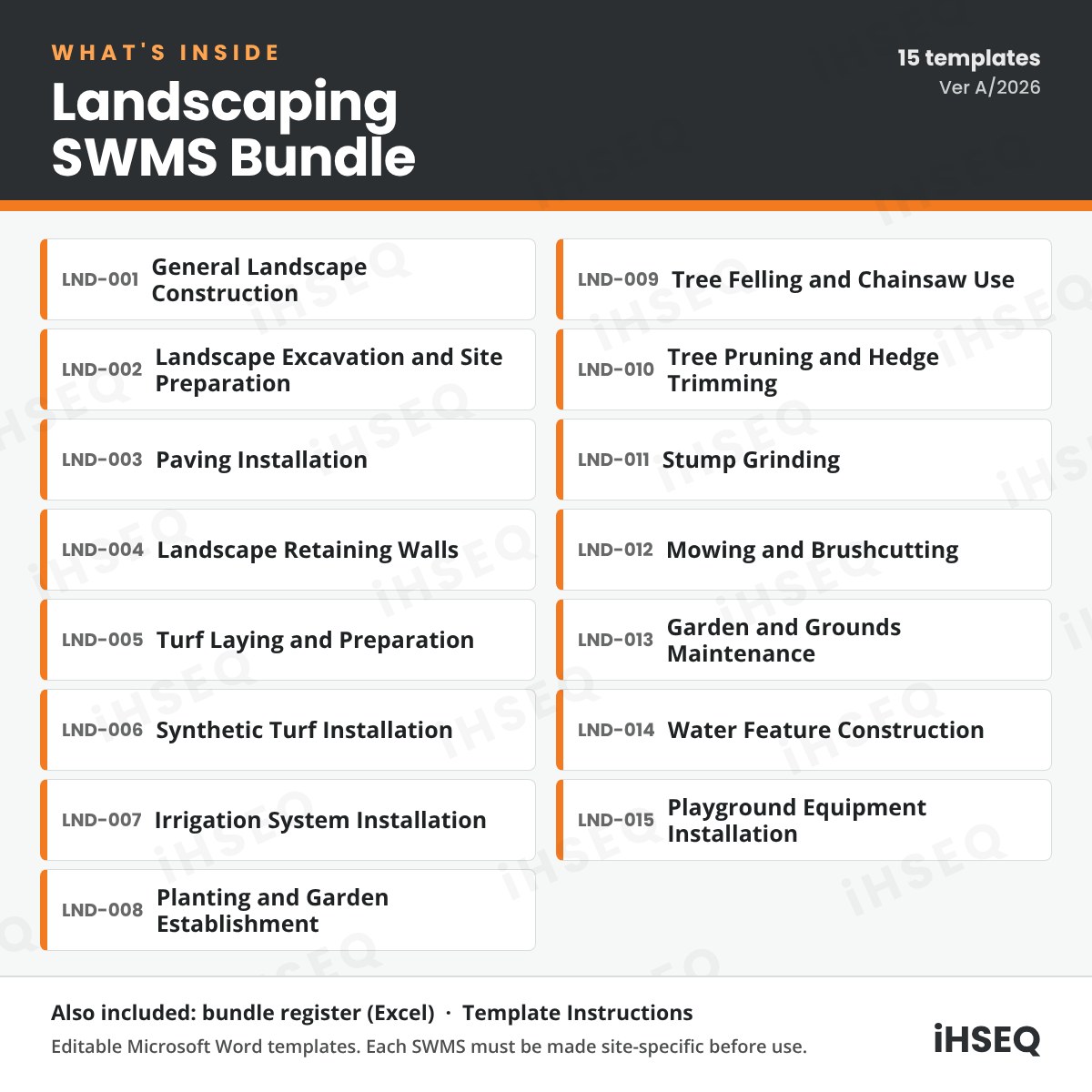
Landscaping SWMS Bundle – 15 Editable Templates
Original price was: $850.00.$189.00Current price is: $189.00.15 editable SWMS templates for landscapers, gardeners and grounds maintenance contractors. Supplied in Microsoft Word and written against the model WHS Regulation, with the Victorian equivalents noted in each document.
- 15 task-specific Safe Work Method Statement templates
- 12 sequenced job steps in each, with hazards, controls, and initial and residual risk ratings
- Legislation register covering all eight States and Territories
- Bundle register (Excel), Template Instructions and How-to-Use guide included
- Instant download after checkout
These are templates. Each SWMS must be reviewed and made site-specific before use.
Want to see one first? Download the free Portable Ladders SWMS template.